

By somayeh
Published July 22, 2026
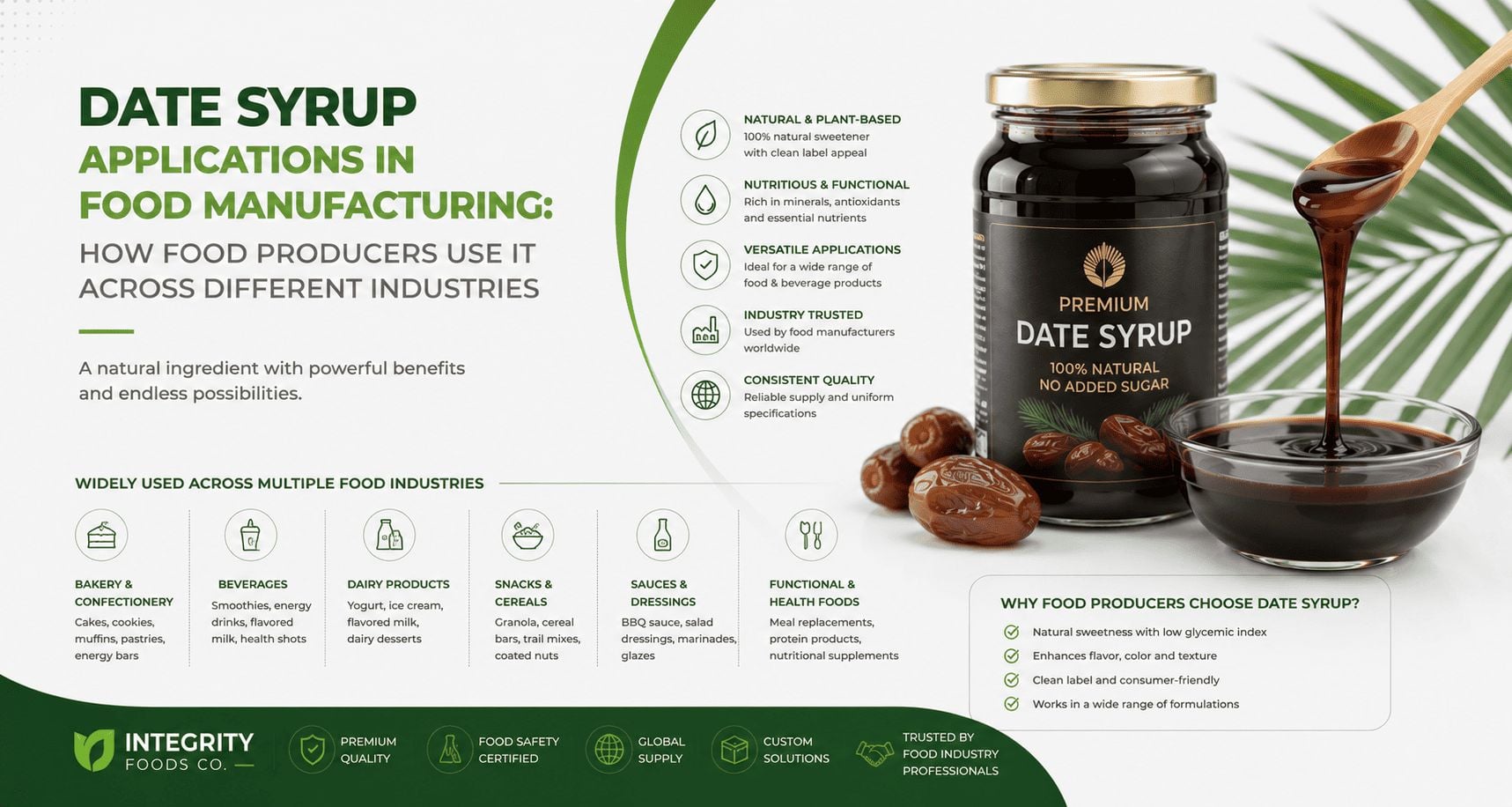
As a natural date sweetener, date syrup is widely used in bakery, dairy, beverage, and date syrup whole foods applications. Its quality directly affects flavor, texture, shelf life, and consistency of your final product. So you should choose the right grade one.
However, selecting the right product requires more than just checking a price list; it requires a deep understanding of core date syrup specifications.
In this guide, we explain the most important date syrup quality parameters and why selecting a good supplier is just as important as checking these values.
Date Syrup Specifications That Matter
Good industrial date syrup specifications ensure that the syrup delivers consistent sweetness, mixes easily with other ingredients and has a stable texture and viscosity. However, not all date syrup products are the same. Two syrups may look similar but perform very differently in industrial applications.
To evaluate quality, as a buyer you should review the following date syrup specifications:
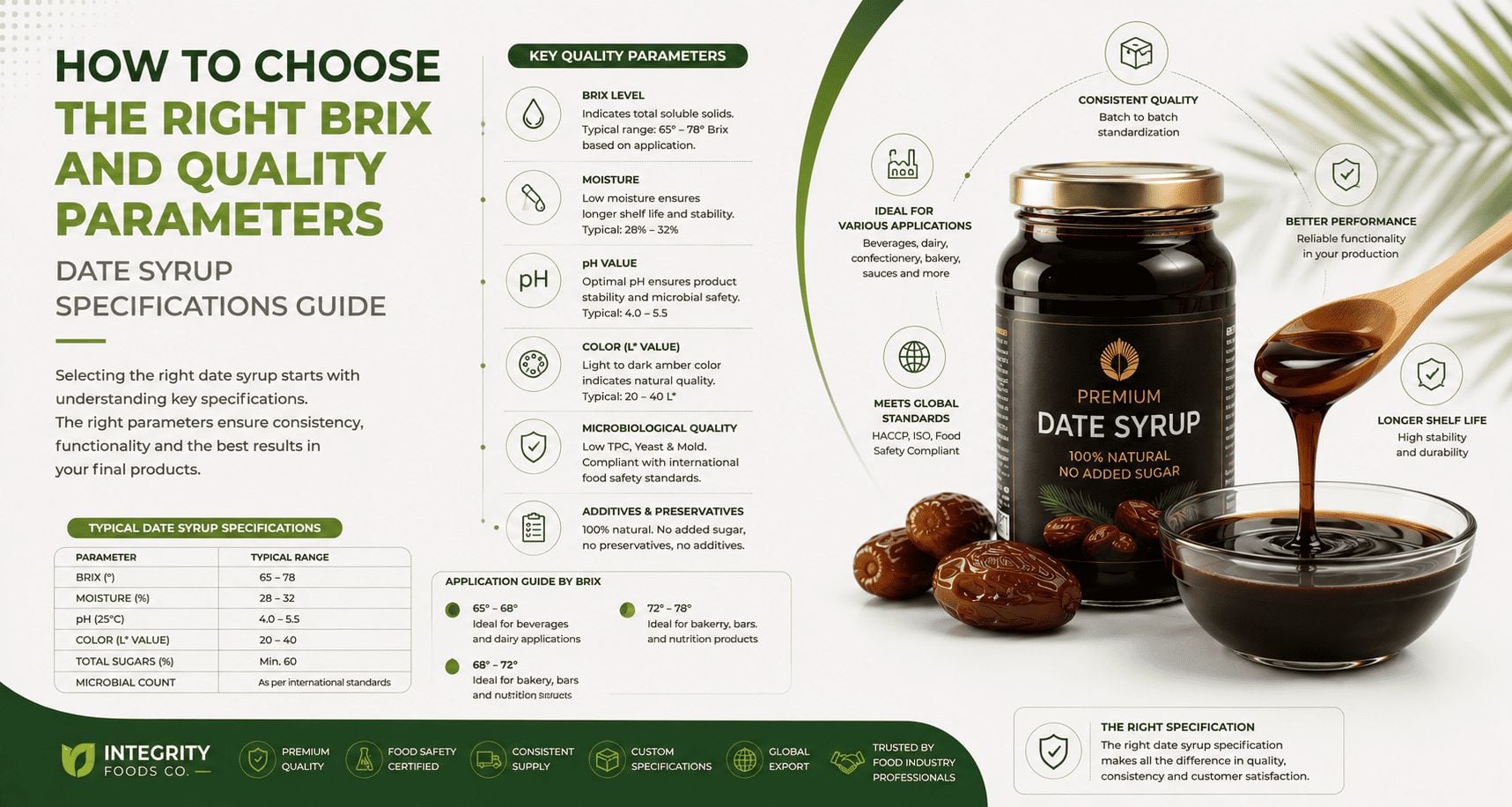
Brix
One of the first specifications you should check is date syrup Brix.
Brix measures the percentage of dissolved solids, mainly natural sugars, in the syrup. It is expressed in degrees (°Brix), with higher values indicating a thicker and more concentrated syrup.
The most common Brix levels include:
70° Brix: Less viscous and closer to a liquid concentrate. Suitable for applications that require easier pumping or dilution.
75° Brix: The industry standard for many food manufacturers, offering an ideal balance between sweetness, viscosity, and handling.
80° Brix: Highly concentrated and very thick, making it suitable for applications that require minimum water content.
HMF (Hydroxymethylfurfural)
HMF is a key indicator of heat exposure. It forms naturally when sugars are exposed to high temperatures for extended periods. Generally, lower HMF levels signal gentler processing and higher product quality. But high HMF values suggest overheating, which can degrade the syrup’s flavor, color, and nutritional value. Reputable manufacturers use indirect heating to minimize this damage.
pH Level
Date syrup is naturally a low-acid product, with a pH that typically ranges between 4.5 and 5.3, depending on the date variety and processing method. Maintaining a stable pH helps improve product stability, supports shelf life, and contributes to consistent flavor.
Quality Is More Than Lab Values
Laboratory specifications are important, but they do not tell the whole story. The production process and quality control practices are equally critical.
High-quality manufacturers use indirect heating to concentrate date syrup rather than direct heat. Unlike direct heating, this process reduces the risk of burning natural sugars and helps preserve the syrup's flavor, color, and nutritional value.
Consistency is another key factor. Many buyers receive one laboratory report and assume every shipment will have the same quality. In reality, long-term consistency is far more valuable than a single good test result.
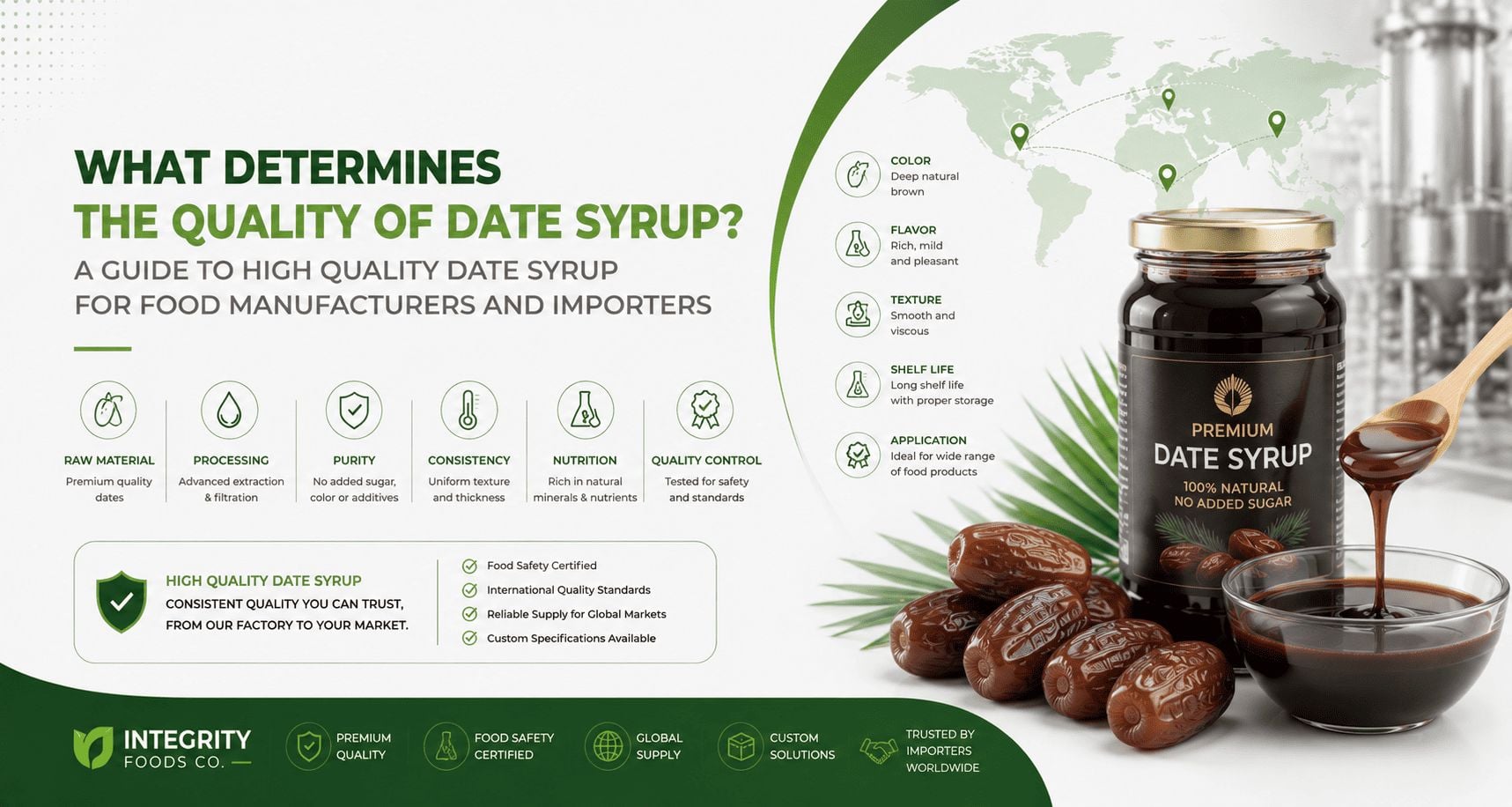
A reliable supplier should consistently deliver stable Brix levels, uniform color and a reliable quality from batch to batch. For more information you can read “What Determines the Quality of Date Syrup?”.
Choose the Right Supplier
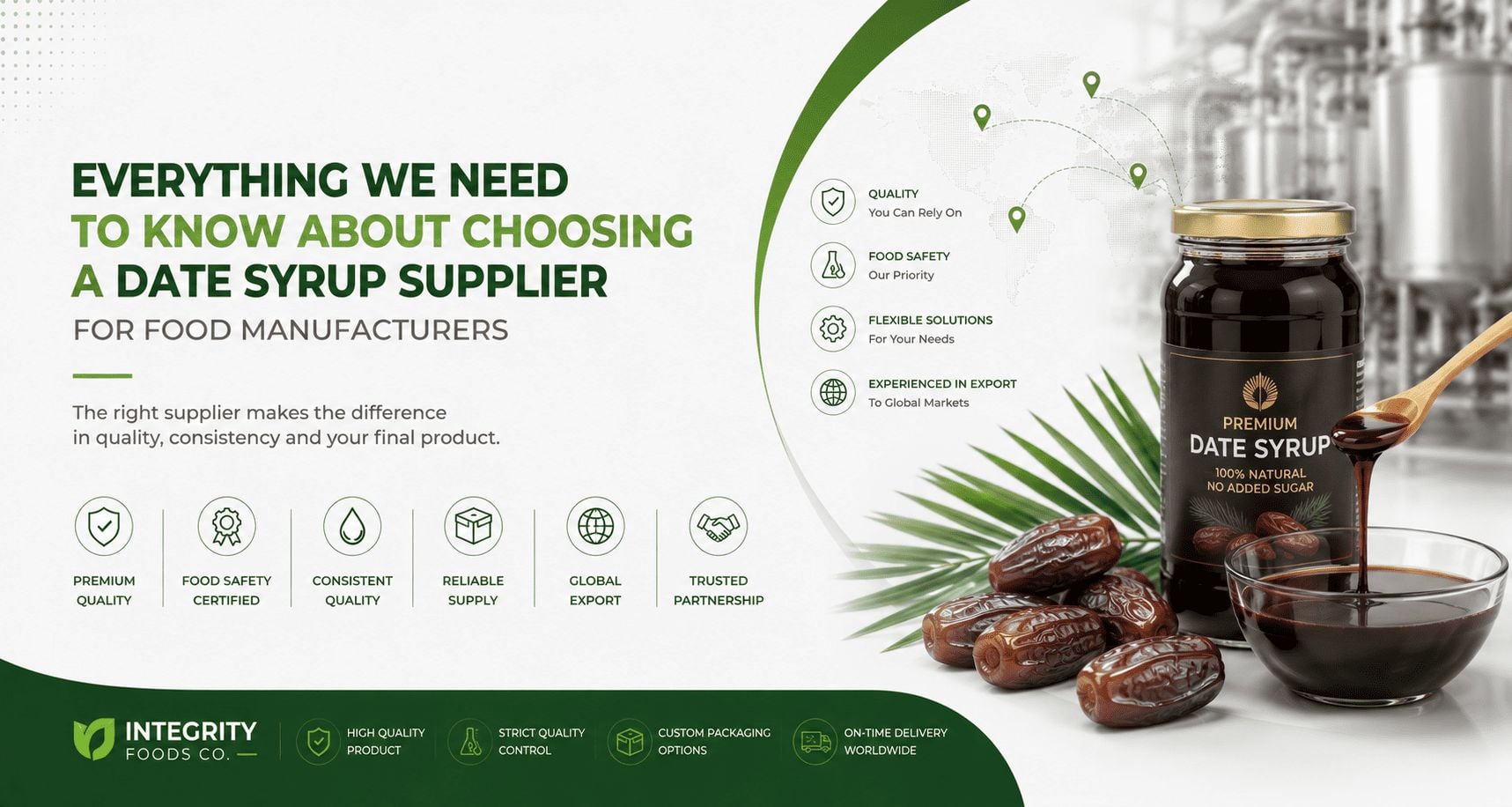
As we said, even if a product meets the required date syrup specifications, poor manufacturing practices can lead to inconsistent deliveries over time. That is why selecting the right factory is one of the most important purchasing decisions. Working with a trusted production partner makes your supply chain more reliable.
Integrity Food can connect you with carefully selected date syrup manufacturers that meet high quality standards. By working with our network of trusted factories, you can source with confidence and maintain the quality standards your business demands.