

By somayeh
Published July 4, 2026
We always use carrot concentrate for beverage industry and foods as a coloring, or flavor enhancer. But have you ever wondered how carrot concentrate is produced? And what separates a high-quality concentrate from an average one?
In this article, we explain the main stages of Industrial carrot concentrate production.
9 Steps of Industrial Carrot Concentrate Production
Turning carrots into a concentrated ingredient isn’t as simple as you think. Carrot concentrate suppliers follow a carefully controlled sequence of steps to preserve this vegetable’s natural characteristics while achieving the desired concentration. Let's look at these steps:
1.Selecting the Right Carrots
The first step of carrot concentrate production process is selecting the right raw material. Experienced producers know that no amount of processing can fix poor-quality input and the final result depends heavily on this stage. That’s why they carefully choose fresh, mature, and firm carrots that are free from defects, decay, or insect damage.
2. Washing and Sorting
Now the selected carrots go through an industrial washing system; high pressure water sprays and rotating drums remove soil, dust, and any other particles that have stuck to them.
After washing, the carrots pass through a second sorting station where workers or optical sorters remove any damaged pieces before they enter the main processing line.
3. Steam Peeling and Brushing
The cleaned carrots move to the peeling stage. They are briefly exposed to high pressure steam, which loosens the outer skin. Then, rotating brushes gently scrub off the loosened peel from the surface.
Compared to traditional knife peeling methods, this process is more efficient; less product goes to waste, and more of the carrot’s edible portion is retained.
4. Cutting and Mashing
Now the peeled carrots are chopped into smaller pieces and then mashed into a smooth puree. This puree is the base material for bulk carrot concentrate production and directly affects how well the next stages perform.
5. Cooking
At this step, the carrot mash is gently heated under controlled conditions to soften the plant tissue and improve extraction efficiency. It also helps release the carrots’ natural sugars and color compounds. And aids reduce microbial activity.
6. Pressing and Juice Extraction
After cooking, the mash passes through an industrial pressing system. The goal here is to separate the liquid fraction from the insoluble fiber.
Modern presses use controlled, gradual pressure to extract as much juice as possible without generating excessive heat or shear, both of which could degrade quality. The resulting carrot juice contains the soluble components for industrial use of carrot concentrate, which will be concentrated later in the process.
7. Concentration
At this stage, most of the water in the carrot juice is removed through controlled evaporation, often under reduced pressure and at relatively low temperatures; because heat can degrade the delicate flavor and color compounds and we don't want that.
As the water content drops, the concentration of natural solids rises, creating a thicker product with intense flavor and color. Depending on the target brix (a measure of sugar content), the final concentrate may be anywhere from 40° to 70° Brix.
8. Sterilization
The concentrate needs to be stabilized for long term storage. Sterilization is carried out using a thermal process, often a plate heat exchanger, that eliminates spoilage microorganisms and enzymes. Good process control at this stage is what separates reliable suppliers from the rest.
9. Aseptic Filling
The last step is aseptic filling; transferring the sterilized carrot concentrate into sterile packaging under hygienic conditions to prevent contamination.
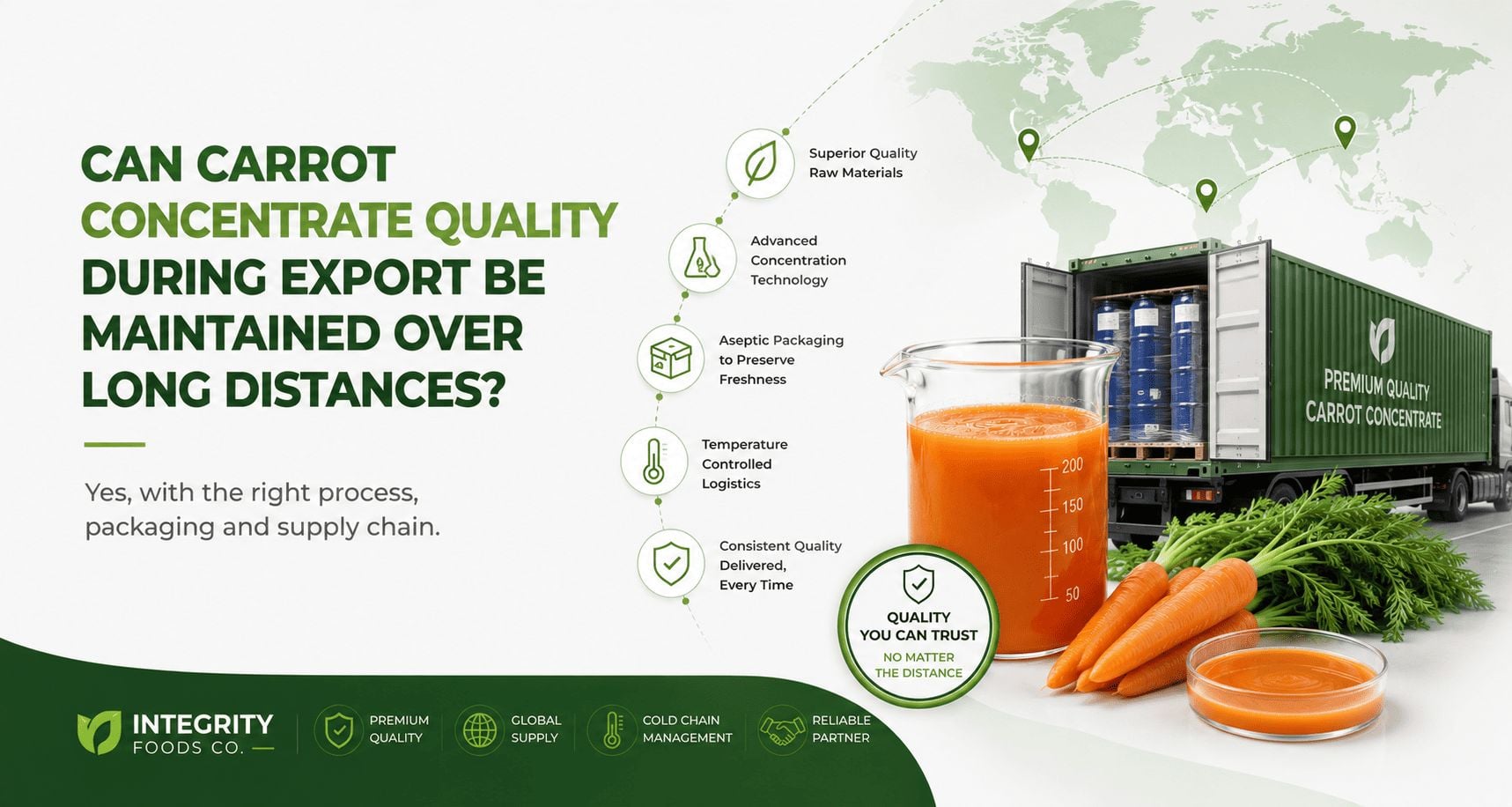
The most common packaging format for carrot concentrate is aseptic bag in drum: a sterile inner bag placed inside a protective drum. This system prevents recontamination and allows the concentrate to be stored and shipped at ambient temperature for months without refrigeration.
Final Thoughts
Every stage of industrial carrot concentrate production affects the final product. That’s why quality can vary noticeably between different suppliers.
At Integrity Food Co., we work with established carrot concentrate suppliers whose processes we know and trust, and we’re happy to help you find the right specification for your application. So, you can count on our team whenever you need.